Salons and beauty
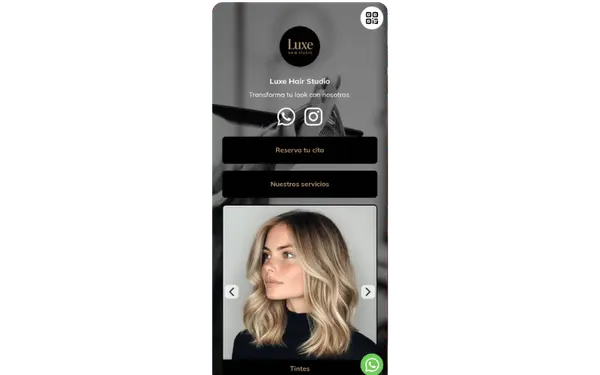
Put Book now or WhatsApp first. Support with price clues, before-and-after visuals, reviews, and location. Do not crowd the top with low-priority social links.
A small business does not need a prettier links list. It needs one page that pulls together the things that drive action on mobile: WhatsApp, bookings, reviews, location, and offer in the same place.
This guide explains what should appear first, which business blocks actually help conversion, and when one lightweight page is enough before a broader website makes sense.
Quick answer
What makes this different: this is not just a links list. It is a small-business page built to help people act.
A good small-business page is not a pile of links. It gives people one clear next step.
The point is simple: combine contact, trust, offer, and location on one lightweight page.
For many small businesses, traffic starts on Instagram, TikTok, WhatsApp, Google Business Profile, or QR scans. People do not arrive to explore a full website. They arrive to do one thing now: message, book, order, find location, or check trust quickly.
That is why a practical one-page business hub often performs better than sending everyone to a generic homepage or a decorative list of links. The page should route action first and support that action with proof, context, and offer details.
If you are still deciding between formats, compare this page with a simple small business website or start with what is a link in bio page.
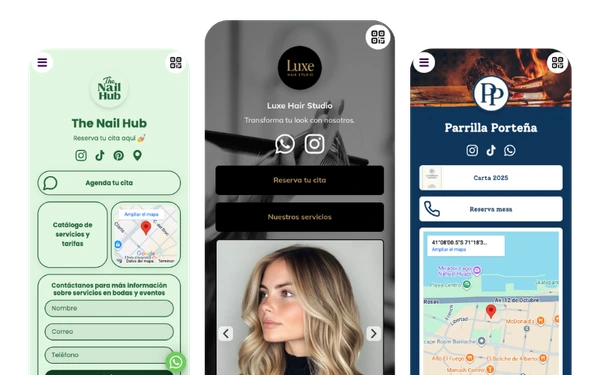
Simple rule: Small businesses usually do not need more links. They need one page that combines contact, proof, offer, and next step.
You can build this kind of local-business page in minutes with atom.bio.
Build your business page| Block | When it should be high priority | Why it helps conversion |
|---|---|---|
| WhatsApp or main chat | Messaging is your main sales or support path | Makes the next action obvious and fast |
| Bookings or reservations | Appointments, tables, classes, or time slots matter | Reduces back-and-forth before commitment |
| Services, products, menu, or catalog | Visitors need to choose before contacting | Improves first-message quality and intent |
| Reviews and proof | Trust is needed before message or booking | Increases confidence in one screen |
| Map, hours, and service area | Local visits or local service coverage matter | Removes location uncertainty quickly |
| Gallery and large visuals | Visual proof drives decisions | Shows quality without long explanations |
| Story and long-form explanation | Higher-trust or custom services | Explains process, credibility, and fit |
| Form and qualification | Leads need structured details | Filters low-quality inquiries |
The order that usually works best is: primary action first, trust and offer second, secondary links last.
Practical rule: If a block does not help someone message, book, order, trust, or find you faster, it should not be above the fold.
Build your business page with WhatsApp, products, reviews, and map in one conversion-focused flow.
Build your pageFor many local businesses, one page is enough when customers mainly need to message, book, order, or get directions.
A one-page business setup is especially useful when local visitors want to act fast instead of browse. The page should make location, contact, and next step obvious in the same screen flow.
Local rule: If the business depends on nearby traffic, location, hours, WhatsApp, bookings, and trust should never be buried below low-priority links.
Put Book now or WhatsApp first. Support with price clues, before-and-after visuals, reviews, and location. Do not crowd the top with low-priority social links.
Lead with booking or WhatsApp consultation. Support with credentials, treatment summary, trust story, and clear appointment info.
Start with menu, order, reserve, or WhatsApp depending on your main operation. Add map, hours, and proof nearby so visitors decide quickly.
Lead with featured products or collections and a clear order path. Use gallery and price clues. Avoid burying products under generic intro text.
Put request quote or WhatsApp first, then areas served, service list, and trust proof. Add a short form when lead qualification matters.
Start with primary offer and one clear contact path. Add proof, process summary, and fit criteria so prospects self-qualify before messaging.
Lead with request quote or WhatsApp and support with examples, locations, and response-time expectations. Keep forms short and focused.
Show gallery and featured pieces first, then custom-order WhatsApp path. Use story and process to build value before pricing discussions.
Put class booking or WhatsApp first. Support with schedule, class types, testimonials, and location details.
Lead with portfolio samples and inquiry path, then pricing clues, availability, and process summary. Avoid forcing visitors to ask basic questions in chat.
If you want concrete layout references before building, review real published pages in the gallery.
Some businesses cannot convert with only short buttons. They need trust-building context: how they work, who they serve, what makes their process reliable, and why local customers choose them.
Practical line: An action-first small-business page can behave like a mini-site before a full website is necessary.
Best when messaging is the main business action. Put WhatsApp first, add clear route buttons, and support with trust, map, and service summary.
If your leads come mostly from Instagram profile traffic, compare this structure with the Instagram guide.
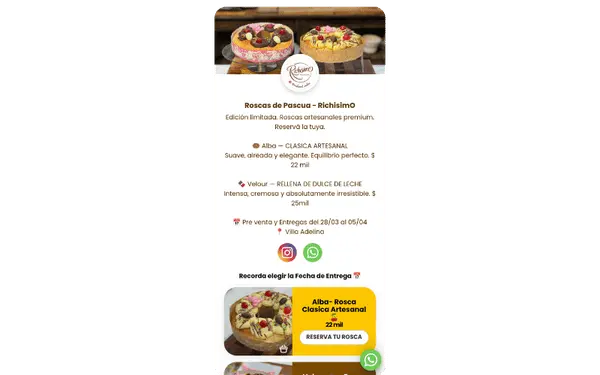
Best when people need to browse a few options before ordering or messaging. Put featured items first, then route to order, WhatsApp, or booking.
For that structure, compare this guide with a product-focused page or, if browsing depth matters more, with a digital catalog.
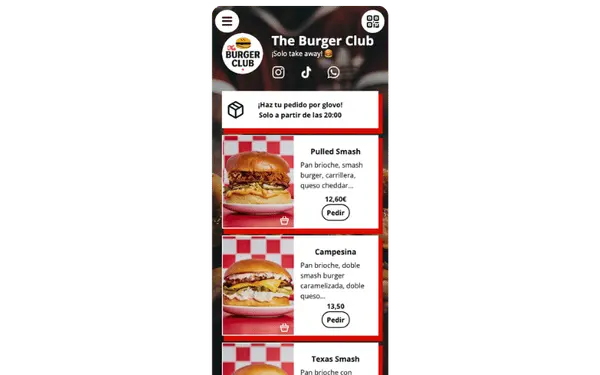
Best when people need confidence before they contact you. Lead with one action, then show reviews, story, credentials, location, and key FAQs.
If local discovery also depends on short-form platform traffic, pair this with the TikTok guide.
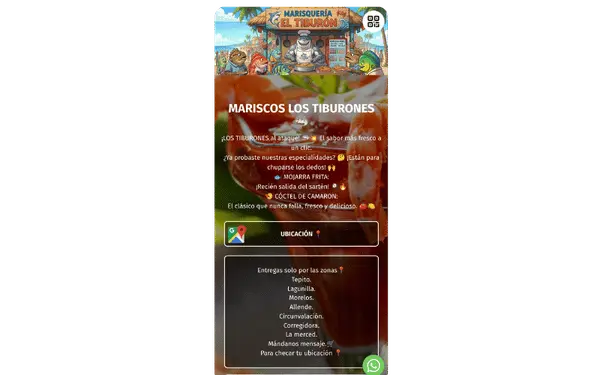
Best when the business needs immediate conversion now and broader website scope later. Start with one strong page, then expand only when depth is truly required.
That is when it makes sense to compare this page with the create website option.
| Decision point | One-page business setup | Full website |
|---|---|---|
| Enough when | Most traffic comes from social, messaging, QR, or local discovery and people mainly need one next action | You need many offers, deeper navigation, and dedicated pages for multiple intents |
| SEO content depth | Good for one strong conversion page | Better when you need multiple SEO pages and broader information architecture |
| Speed to launch | Faster | Slower but deeper |
| Typical next step | Message, booking, order, quote, or location action | Broader browsing, multiple pages, and deeper research before contact |
Many businesses should start with one clear mobile-first page, then expand later only when the business truly needs broader SEO and navigation depth.
In many cases, this is not an either-or choice. The link in bio page handles social, messaging, and QR traffic, and one of its links can send people to the full website when they need more detail.
Yes. It works especially well when visitors need to message you, find your location, read reviews, or understand services quickly on mobile.
Start with the main action, usually WhatsApp, booking, or order. Then add trust and offer context near that action.
Use one page when your main need is conversion from social, messaging, QR, or local traffic. Use a website when you need multiple SEO pages and broader navigation.
Usually: primary action, products or services, reviews, map and hours, and only the secondary links that support conversion.
They matter when trust is the barrier, especially for clinics, premium services, specialists, and custom work.
Yes, especially in beauty, food, events, interiors, retail, and crafts where visual proof drives faster decisions.
Use one action-first page to turn local traffic into messages, bookings, orders, or visits before you invest in a heavier website.
Create your free link in bio